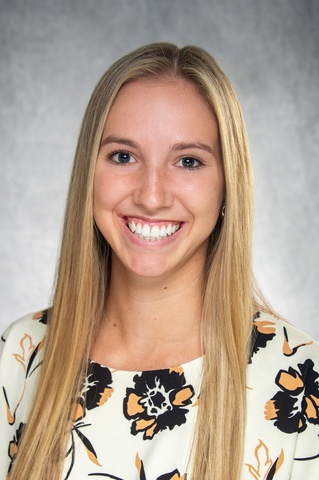
Work Title: Business Development Outreach Liaison at Aveanna Medical Solutions
What is your current role, and what area of nutrition or dietetics do you work in?
I work in the sales division of Aveanna Medical Solutions, which falls under a combination of clinical nutrition and nutrition sales. My responsibilities include coordinating patient discharges with necessary enteral nutrition equipment/formula, leading education sessions with patients and families, communicating with hospital discharge planning teams, and marketing Aveanna’s services to new referral clinics and hospitals.
What drew you to this area of practice?
My favorite units to work in during the MCN program (masters of clinical nutrition) included the NICU and Outpatient Oncology because of the higher frequency of tube-feeding patients. I enjoyed the complex calculations within nutrition support and the impact I had as a (student) dietitian with these vulnerable populations. This translated well with my current role because the majority of my patients at Aveanna receive nutrition support, with NICU and head and neck cancer patients as the most common.
How did the University of Iowa Master of Clinical Nutrition program prepare you for your work as a registered dietitian?
The UI MCN program provided excellent preparation for my future as a dietitian through its outstanding academic course load, rigorous experiential learning hours, and various student-led projects. The classes are challenging but provide the necessary information to not only understand intricate nutritional concepts but also critically analyze new information or specific patient examples. The faculty are exceptional at encouraging students to develop problem-solving skills which are necessary to excel at both the “art and science” aspect of dietetics. This is especially demonstrated in the experiential hours and staff relief portion of the MCN program when students are treated as active dietitians (with guidance and supervision from staff RDs) in a variety of units. The MCN program additionally included a multitude of management related projects that were student-led and further developed my leadership skills and ability to work within a group setting. This is vital in my current sales position because not only is it necessary to understand the clinical aspects of my job but equally important to possess the skills to take charge of a patient’s discharge planning and build long-lasting relationships with referrals.
What aspects of the program were most valuable in preparing you for your current role?
The most valuable aspect of the MCN program was the hands-on experience working on the floors with UIHC dietitians in a variety of different units. These experiential hours sharpened my RD skills and built my confidence with both patient interactions and communicating within medical care teams. I felt extremely prepared to work in a clinical setting after graduation, which made the transition to working with nutrition support patients in a sales environment very smooth.
What has been the most rewarding part of your career since graduating from the program?
The most rewarding part of my career has been working with patients and their families that are new to tube-feeding. It feels very empowering to provide them with the education and confidence to understand this equipment so that they/their loved one can have a safe discharge and maintain a high quality of life.
What advice would you give to prospective students considering the Master of Clinical Nutrition program?
Keep an open mind! I was very interested in becoming a Sports dietitian when starting the MCN program but quickly fell in love with critical care and nutrition support. There are so many different areas of dietetics and the MCN program does an excellent job of connecting students with a variety of experiences.